
Bartlett Previous Resident Sources
A Bartlett address can lead into Cook, DuPage, or Kane County, so its county and parcel identification number, or PIN, come first. The records below cover different eras and prove different things. A recorded owner is evidence of title, while a directory or census entry is stronger evidence that a household was actually present. No single source supplies a complete list of previous residents.
| Source | Years It Covers | Where Held | What It Shows |
|---|---|---|---|
| Kane recorded instruments | 1837 onward | Kane County Recorder | Deeds, legal-chain clues, and parties |
| DuPage recorder index | March 16, 1961 onward | DuPage County Recorder | Names, property, document types, dates, and images |
| Cook parcel archive | 2000 to current | CookViewer and county property portals | Parcel history, imagery, assessments, and linked records |
| Regional phone directories | 1928 to 1983/84, with gaps | Schaumburg Township District Library holdings | Address, telephone, household, and business clues |
| Historic local sources | 1840s onward | Bartlett museums, libraries, newspapers, and cemetery | Settlement, household, obituary, and burial context |
Begin with the current county parcel card for a recent search. For older work, move from the deed chain to a directory, newspaper, census, or cemetery source that can test occupancy. Kane's long recorder span makes legal descriptions crucial. DuPage searches before the online index date may require office research. Cook's inspected tools do not promise one uniform deed start date, so older Cook work should be confirmed with the recording office.
Bartlett Address History Crosses Counties
The Village county guide gives a useful first sort. Residences north of Devon Avenue and east of Illinois Route 25 are generally in Cook County, except Bartlett Pointe West in Kane County. Residences south of Devon and east of Route 25 are in DuPage County. The word generally matters. Confirm the parcel in county GIS before ordering records.
County choice changes the recorder, assessor, clerk, and research counter. It can also change the depth of online access. Write the county, township, PIN, subdivision, and legal description in a research log before searching previous residents. If a parcel sits near a boundary, save a dated map view. Postal city names and ZIP codes do not settle legal jurisdiction.
Online tools are only one channel. Recorder public terminals, Bartlett's planning counter, library reference staff, and museum staff can help with older or poorly indexed material. A narrow phone, email, or Illinois Freedom of Information Act request can seek a permit, plat, annexation file, or inspection record by address and date range.
Note: Ask for one parcel and a defined period, since a focused request is easier for a custodian to identify and review.
Cook Records for Bartlett Residents
On the Cook side, use the Cook County property information portal to connect a PIN with tax history, payments, exemptions, documents, deeds, liens, appeals, and the property description. CookViewer adds current parcel geography and archive layers from 2000 forward. These sources build a timeline, but neither proves that each taxpayer lived at the site.
The captured Cook portal view shows why a PIN is more durable than a typed street label.
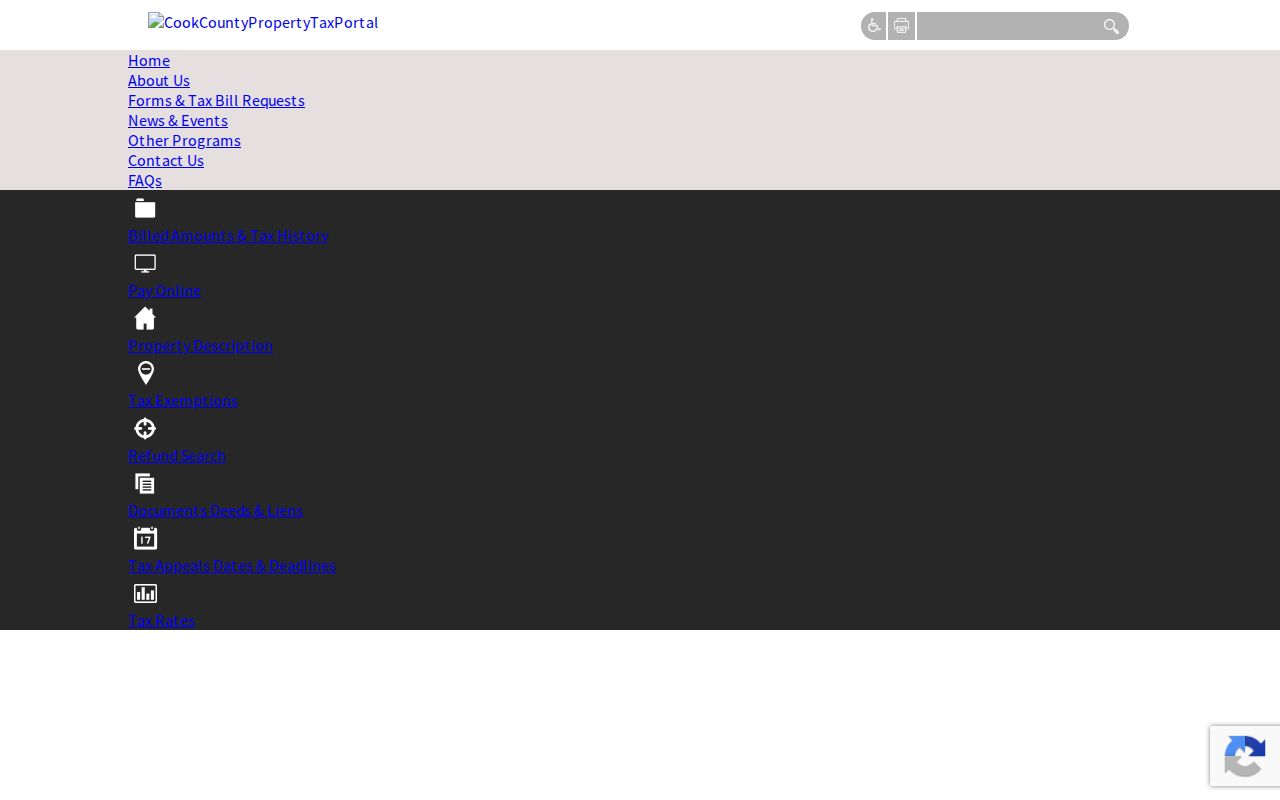
That parcel-centered route helps when an address has been corrected, split, combined, or described differently in an older instrument. For records outside the web tools, contact the Cook County Clerk Recording Division or use its research counter in Chicago.
The Cook Assessor sample property record also shows building traits and warns that property location is not necessarily the legal or postal mailing address.
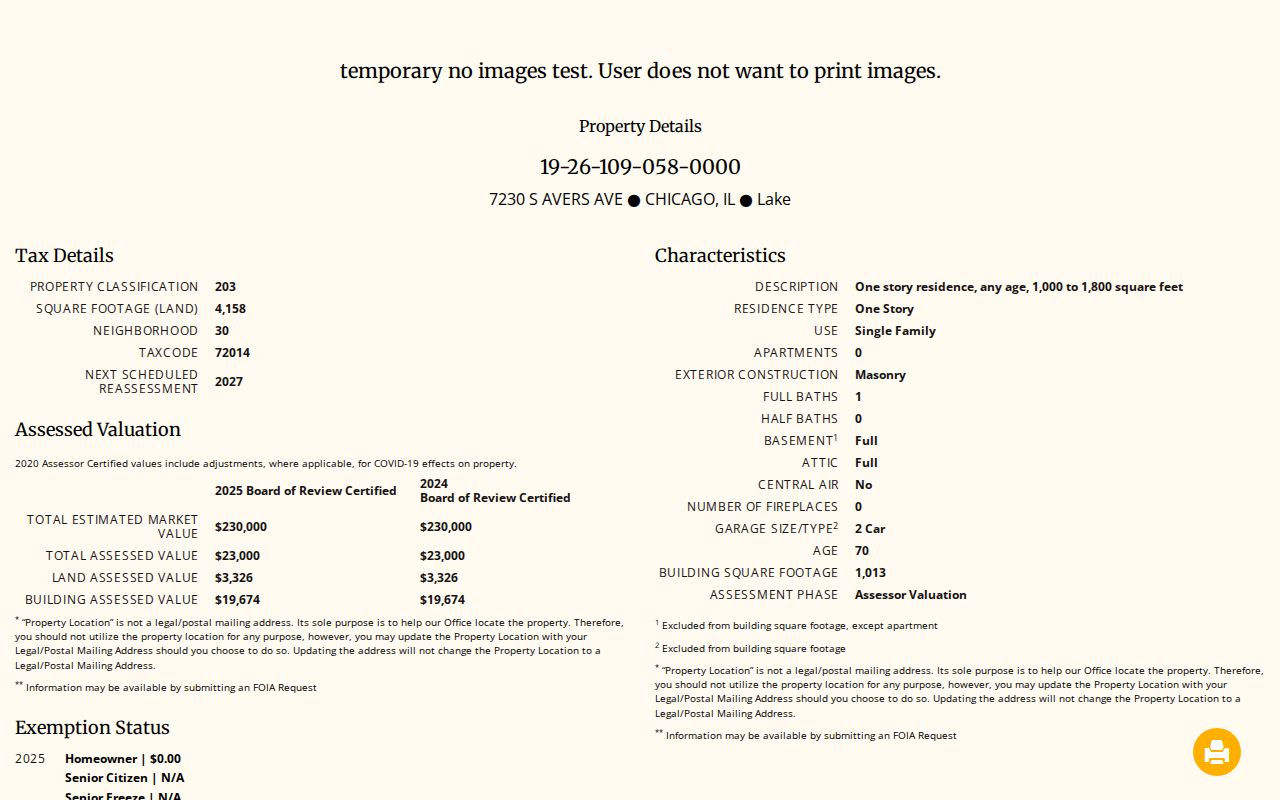
Use that distinction to avoid attaching an old name to the wrong place. The building description can support a house-history timeline, but it is not evidence of occupancy.
DuPage Previous Resident Trail
The DuPage Recorder search accepts a last and first name, bank or trust, subdivision or business, street, city, PIN, document number, type group, document type, and date range. Its indexed documents and images begin March 16, 1961. Search both the property fields and the names found in each instrument.
The recorded-document screen makes the backward method visible, even though a live person-specific result was not captured during research.
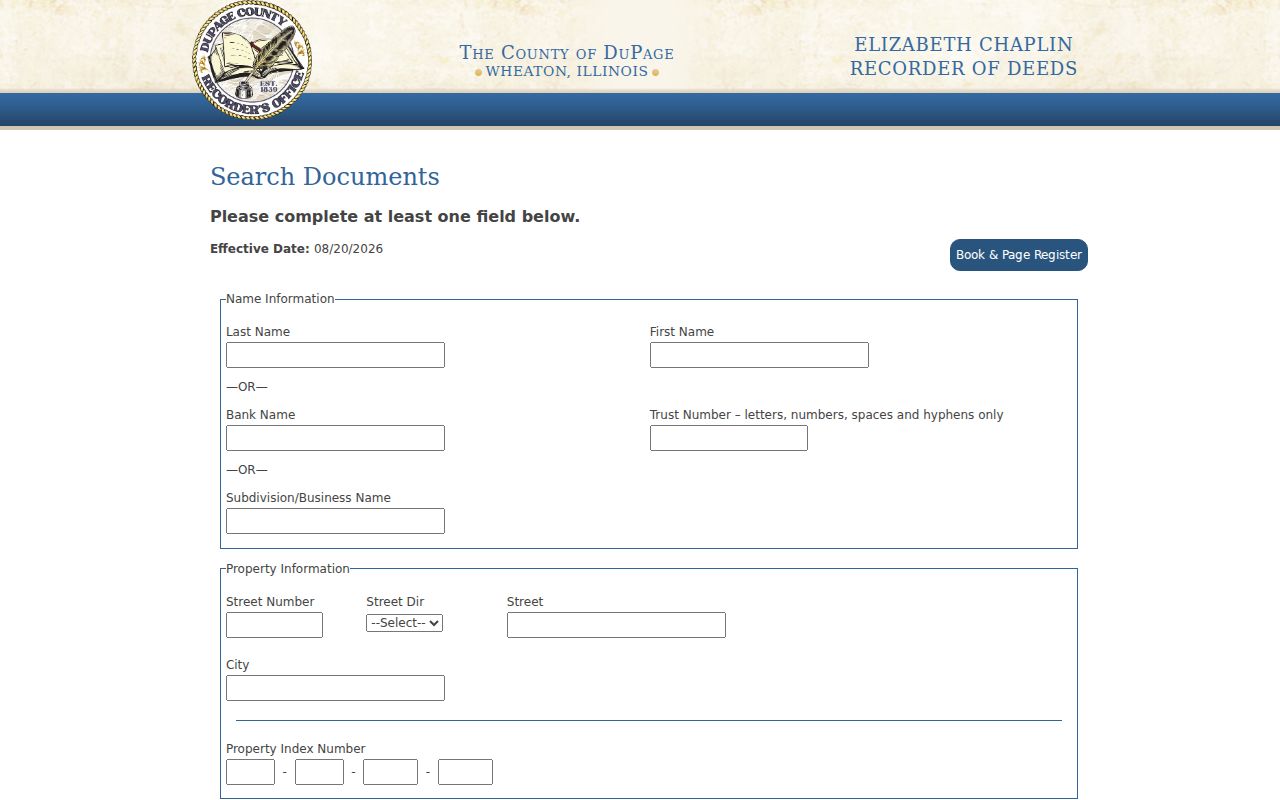
Earlier material may require paper records or staff help at the Wheaton office. Never fill that gap with an assumed owner sequence.
A DuPage sample parcel card includes transfer and conveyance-history tabs that can supply a first-pass timeline.
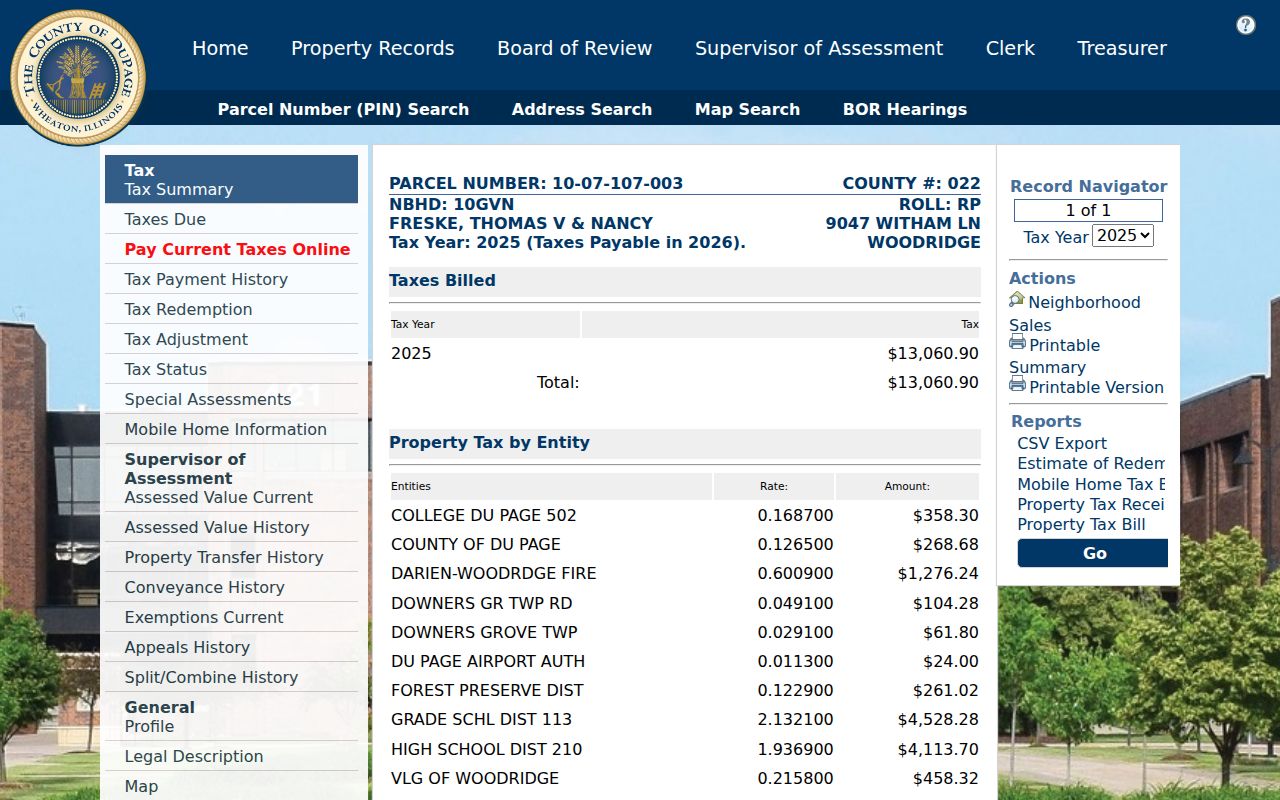
Follow every useful transfer lead to the recorder image. A tax card summarizes data, while the recorded instrument contains the parties, dates, and legal description needed to keep the chain sound.
Trace Bartlett Owners Backward
A chain of title is the linked series of recorded transfers for one parcel. Start with today's owner only to find the newest deed. Then work backward through the seller's earlier purchase. Record the instrument date and recording date, because they can differ. Keep mortgages, releases, plats, and probate instruments in view, but do not treat each one as a sale.
- Find the current county parcel card. Copy the PIN, subdivision, and full legal description.
- Locate the current owner's purchase instrument in the county recorder index. Read the actual image when available.
- Take the seller, or grantor, from that deed and search that party as a grantee to find the earlier purchase.
- Repeat the link, recording document numbers, both dates, parties, and the legal description at each stage.
- At the online cutoff, ask for the recorder's public terminal, deed books, microfilm, or staff research route.
- Grantor / grantee
- The grantor transfers an interest; the grantee receives it.
- Chain of title
- The recorded sequence that links the parcel's transfers through time.
- Legal description
- The lot, block, subdivision, or survey wording that identifies land even when its street label changes.
Kane County states that its property records reach back to 1837 and offers both online and in-office public research. Early deeds may use township, range, section, plat, or the historic Spaulding label instead of a modern address. That is why the legal description carries more weight than a postal city.
Bartlett Phone Books Name Households
Regional phone books provide the household layer that deeds lack. Schaumburg Township District Library reports Bartlett/Roselle volumes for 1948-49 and Bartlett/Roselle/Bloomingdale books for 1953 and 1956-59, within wider holdings from 1928 through 1983/84. A reverse, or criss-cross, directory is arranged by address or phone number rather than only by surname.
The historical value is unusually strong. Bartlett's official account lists 408 people and 200 telephones in 1910. That ratio does not mean every person or home was listed, but it shows why telephone records deserve a place beside census and deed work. Business listings, shared lines, and unlisted numbers still create gaps.
Use the Schaumburg local-history service for staff help, atlases, newspapers, and directory leads. Bartlett Public Library also offers in-library genealogy databases and local newspaper resources. The full collection context belongs on the Bartlett city directory page; address-history work should extract only the years and entries needed for the house.
Note: Copy the exact printed address and abbreviation key, since a small directional or exchange change may separate two different households.
Historic Bartlett Labels Can Shift
Past residents may appear under a settlement, subdivision, county, or postal label that no longer feels local. The original Bartlett depot arrived in 1873. The nearby Spaulding stop later became part of a failed 1959 incorporation effort, and the area was annexed into Bartlett and Elgin. Search Spaulding as a historical place lead, not as proof that a person occupied a present Bartlett parcel.
Plats, annexation files, and legal descriptions can bridge those labels. A Village planning or FOIA request may locate a dated plat, permit, zoning file, or annexation record. At the recorder, a subdivision name can outperform an address. In a newspaper archive, try the old community name beside a surname, road, school, church, or depot.
County lines add another shift. A nearby Cook, DuPage, or Kane parcel can use a different office even when both mailing addresses say Bartlett. Preserve the source's role label: owner, taxpayer, mailing recipient, occupant, business, or burial. Those terms are not interchangeable.
Confirm Bartlett Previous Residents
A deed chain answers who held title, not who slept at the address. Pair each likely owner with a phone directory, census schedule, tax mailing line, newspaper item, or other source that speaks to presence. Renters may appear in directories and census records while never entering the deed chain. Trusts, lenders, estates, and investors may appear in property instruments without living there.
- Place each recorded owner in a dated timeline and mark the source as title evidence.
- Check the closest available directory year by address and by surname.
- Compare a public census year, allowing for an old enumeration district and changed street label.
- Search local newspapers for a move, sale, obituary, business notice, or civic reference.
- Use probate or cemetery material only for the fact it proves. Burial alone does not prove Bartlett residence.
The Illinois Newspaper Project identifies a Bartlett newspaper title and microfilm lead. Bartlett Cemetery, established in 1892, provides marker and family clues through its official map and policy. Museum history can supply settlement context, including Luther and Lyman Bartlett's land purchases in 1844 and 1845, but it is not a parcel-by-parcel resident roll.
Lawful use. Trace Bartlett previous residents for house history, family history, and other lawful personal research. Never use records to track, intimidate, or harass a living person.
A strong conclusion cites at least two independent records and states what each proves. If the deed owner and directory household do not match, keep both facts and label the gap. Honest uncertainty is more useful than a neat but unsupported list of past residents.