
Finding Residents Across Bartlett
Bartlett has no single master roll of everyone who lives in the village. An owner can appear on a tax card, a registered voter can confirm only their own status through an election lookup, and a court party may have no present tie to the address shown in a docket. The Bartlett residents directory works best as a chain of dated records. Start with the source closest to the question, then confirm the name, address, county, and date in a second official source.
The first split is geographic. Bartlett stretches through Cook, DuPage, and Kane Counties, so two village addresses may lead to different assessors, recorders, courts, and election offices. A Bartlett postal label alone does not settle the county. Use the Village county guidance, a parcel viewer, or the property identification number before searching deeper.
- Enter the address in the matching county property or GIS search and save the parcel number.
- Read the assessor card for the named owner, mailing role, transfer tabs, and tax year.
- Use the owner name or parcel in the proper recorder index to trace deeds and liens.
- For a person, check the relevant court, voter, license, business, or vital-record route.
- Use Bartlett libraries, museum sources, and old directories when the question reaches into the past.
Bartlett Residents Records Desks
County assignment controls much of a Bartlett records search. Cook recording is handled in Chicago, DuPage offices are in Wheaton, and Kane offices are in Geneva. Each office keeps a distinct index. The assessor connects an address to a parcel and an ownership role; the recorder preserves instruments such as deeds, mortgages, releases, and plats; election officials manage registration records under Illinois limits. For a street-wide task, the county and parcel steps are developed further in the Bartlett street directory.
Municipal files stay with Bartlett when the question concerns a village permit, planning case, police report, business license, cemetery record, or administrative document. The Village transparency route supports online FOIA filing and tracking, plus officer contacts when a narrow record is not already posted.
Bartlett's Three-County Test
The Village gives a practical orientation: homes north of Devon Avenue and east of Illinois Route 25 are generally in Cook County, except Bartlett Pointe West in Kane County. Homes south of Devon and east of Route 25 are generally in DuPage County. Bartlett also intersects Hanover, Wayne, St. Charles, and Elgin townships. These are guides, not a substitute for checking the parcel itself.
This geography is the most important local feature of the Bartlett residents directory. A record found in the wrong county can look like a dead end even when the address is valid. Start with the Village county explanation, then confirm the result in CookViewer, DuPage Parcel Viewer, or KaneMap. Save the county and PIN with every citation so the trail can be repeated later.
Key point. Treat county, township, postal city, and incorporated village as separate fields, each tied to its own source date.
Bartlett Property Search Fields
The three property systems do not ask for the same inputs. Cook County accepts a PIN or an address with a required house number, direction, unit, street without suffix, city, and CAPTCHA. DuPage Property Lookup offers PIN, address, billing name, map, and Board of Review hearing paths. Kane provides an address locator plus county assessment and township links. That difference is why copying one query into all three portals often fails.
| Portal | Useful inputs | Result role |
|---|---|---|
| Cook Assessor | 14-digit PIN; house number; direction; unit; street; city | Current assessment and property identity |
| DuPage Property Lookup | PIN; address; billing name; map | Owner, transfer, exemption, tax, and map tabs |
| Kane property tools | Suggested property address; PIN; township route | Parcel and assessment links |
Owner and resident are not synonyms. A tax card may name a trust, an estate, or a mailing recipient. Keep the field label intact. The official DuPage Property Lookup illustrates how the tabs separate ownership, transfers, assessment, exemptions, map data, and tax history.
Current Bartlett Residents Sources
A useful directory distinguishes the person or entity named by each source. Property rolls name owners or mailing recipients. Recorder indexes name parties to documents. Court systems name parties to cases, while election services confirm limited registration information. Municipal files may name an applicant, contractor, official, or arrestee. None is a complete household list.
| Official source | Name appears as | Custodian | Access path |
|---|---|---|---|
| Property roll | Owner or billing name | Cook, DuPage, or Kane property office | Free online search and office help |
| Recorded documents | Grantor, grantee, or other party | County recorder | Online index; office research; copies |
| Voter service | Registered voter | State or county elections office | Limited official lookup |
| Court docket | Case party | Circuit clerk | Public portal, terminal, or copy request |
| Village file | Applicant, official, or event participant | Village of Bartlett | Posted record or focused FOIA request |
For one name, a careful Bartlett resident lookup records the role, date, office, and identifier from each result. That practice prevents an old owner, court party, or business officer from being presented as a current resident.
Bartlett Court Record Routes
Court access also follows the county. Cook County's Odyssey search accepts a case number or party name and offers advanced filters. DuPage permits searches by complaint number, case number, or a full name with date of birth. Kane warns that party names need exact spelling and also accepts its formatted case number. A docket is the court's event list, not proof that every allegation is true or that an address remains current.
When online material is limited, use the circuit clerk's public terminal or copy process. Illinois re:SearchIL adds remote review of eligible, nonconfidential documents filed after April 1, 2025 under the statewide policy available from May 1, 2025. It does not open sealed, impounded, juvenile, expunged, or otherwise restricted material. The statewide court search should be read alongside the originating clerk's docket.
The successful capture of the Kane court portal shows the public entry point used for case-number and exact-name work.
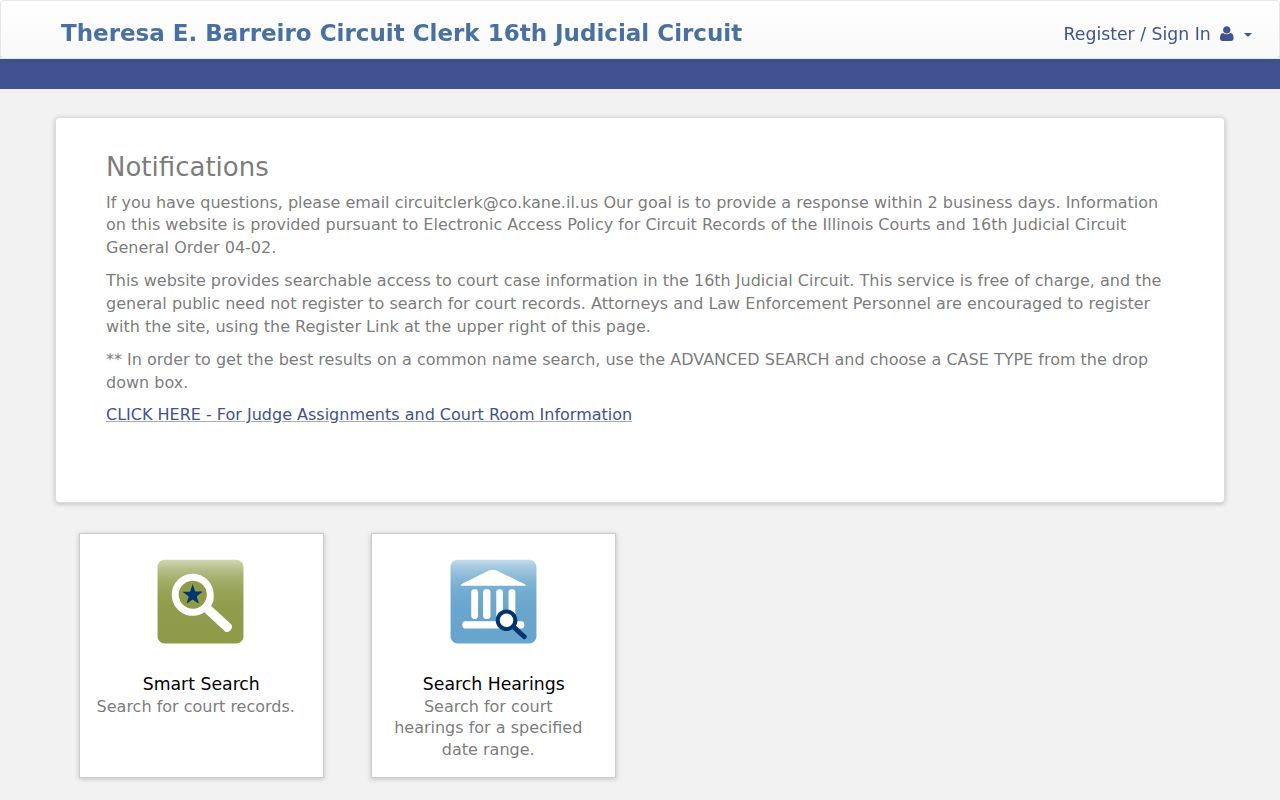
The portal image helps identify the correct county interface before a name is interpreted as a Bartlett connection.
Bartlett Vital Records Access
Birth, death, marriage, and civil-union records are not open name lists. County clerks issue county-held copies, and the Illinois Department of Public Health handles state birth and death requests or verifications under its rules. A requester may need to show identity, relationship, or a personal or property-right interest. Genealogy copies are noncertified and use age thresholds that differ by custodian.
Cook's genealogy program uses older-than thresholds of 75 years for births, 50 for marriages, and 20 for deaths. The researched DuPage forms list separate marriage and death copy schedules, while Kane's form covers birth, death, marriage, civil union, and no-record requests with its own fees. Follow the office tied to the event, not merely the person's later Bartlett address. The IDPH birth-record page explains eligibility, identification, and the state request route.
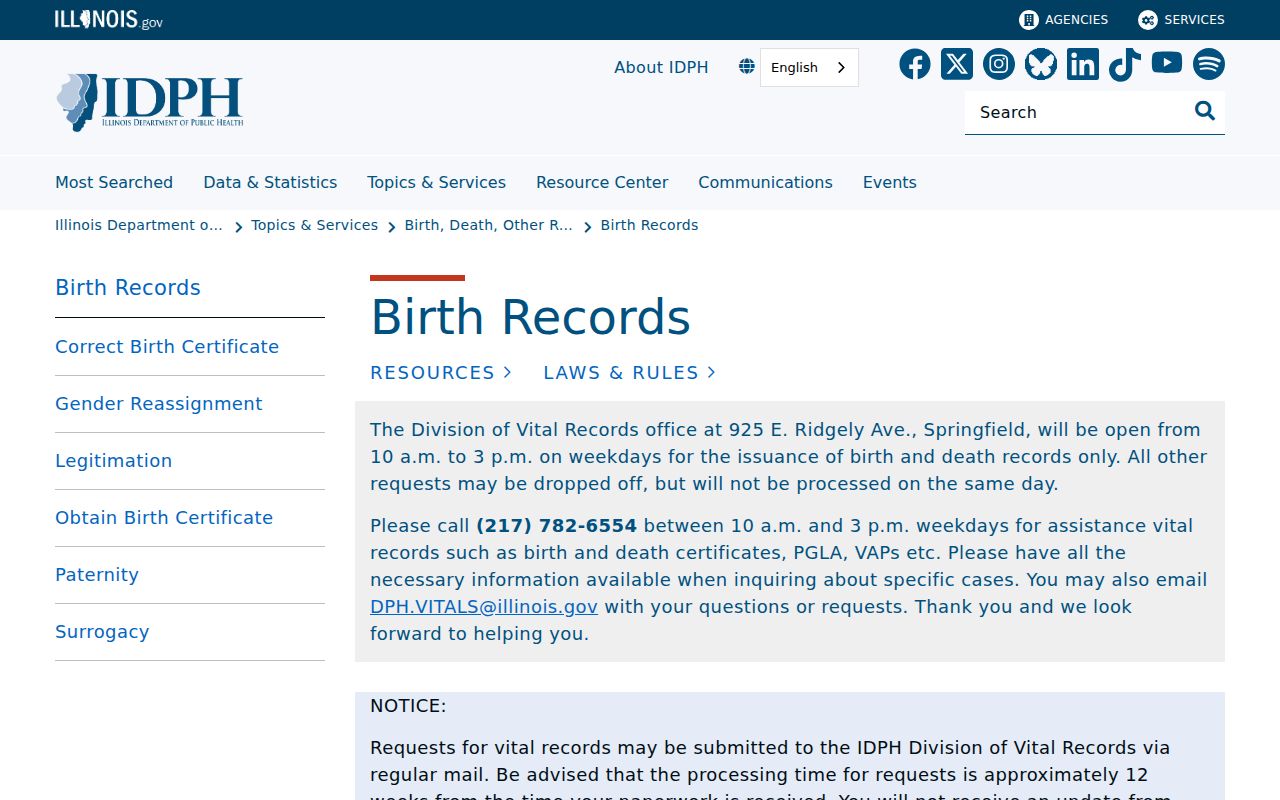
The state page makes clear why a vital record request is controlled access, not a broad resident search.
Bartlett Records Through FOIA
The Illinois Freedom of Information Act, 5 ILCS 140, is the fallback for a specific public municipal record that is not posted. Bartlett accepts online requests and tracking, and it names FOIA officers. Ask for a defined record, office, subject, and date range. A request for all information about residents is too broad and may sweep in exempt personal data.
Section 3 of the Act sets the general response framework and allows an extension in stated circumstances. Section 6 addresses search, copy, medium, and waiver rules. FOIA does not override vital-record eligibility, court sealing, voter protections, juvenile rules, expungement, or the Illinois Address Confidentiality Program. Redaction is a normal part of access, not proof that the office is hiding an otherwise public directory.
The Illinois Attorney General's Public Access Counselor explains the review route for disputes involving FOIA and open meetings.
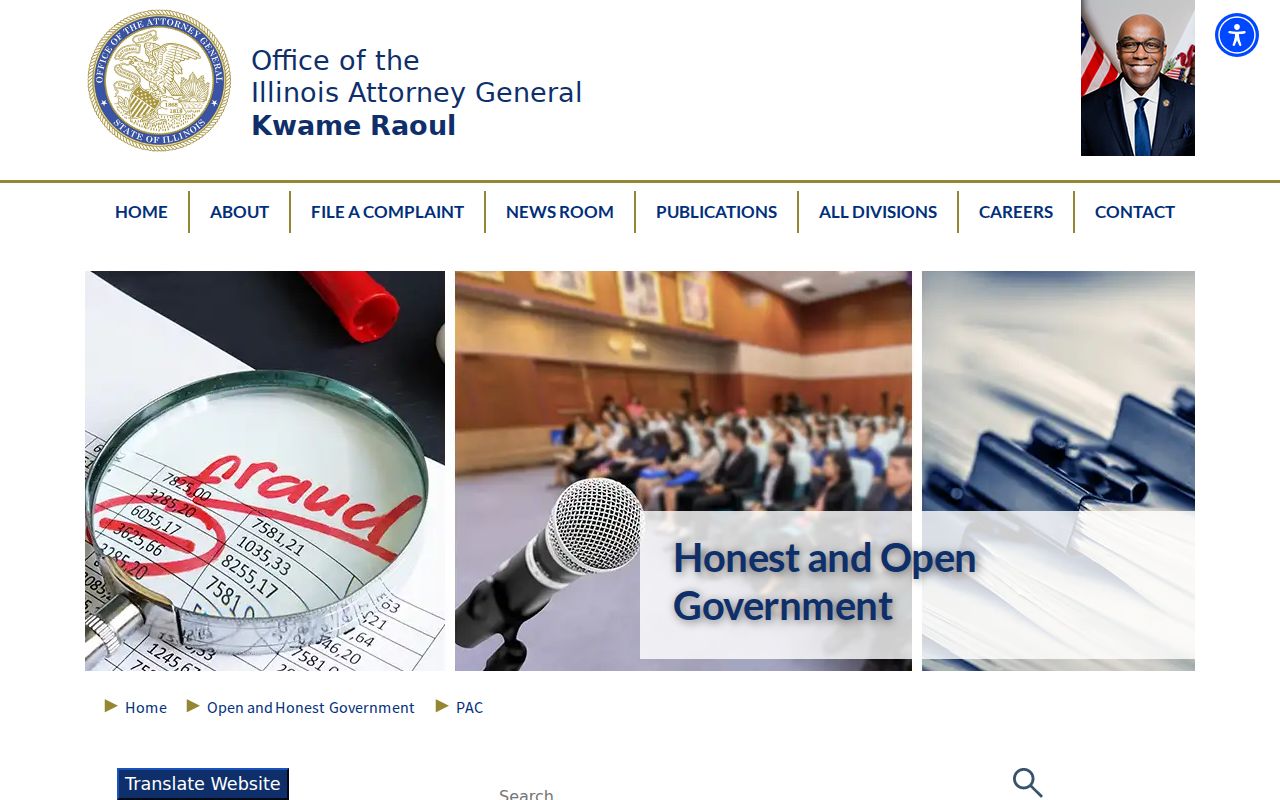
This state resource is the right escalation point after the requester has worked with the actual Bartlett or county custodian.
Bartlett Directory Terms Defined
Record labels matter because a name can serve several roles. Keep the source's own term beside every result, especially when combining the Bartlett residents directory with county and state indexes.
- Roll
- A dated official list made for a defined task, such as assessment or voter administration.
- Index
- A finding aid that points to a document or case; it may not include the underlying image.
- Parcel
- A mapped unit of land identified by a county PIN. It is not the same as a household.
- Criss-cross directory
- A directory arranged by street or telephone number instead of only by surname.
- Certified copy
- An official copy issued by the custodian, usually under rules and fees distinct from viewing an index.
A clean note might read: “owner on DuPage tax card, tax year shown,” rather than “Bartlett resident.” That small distinction preserves what the record proves and what it does not.
Official Bartlett Rolls Compared
Official sources and commercial people-finding products serve different roles. A county or state record identifies its custodian, field labels, and date. A commercial compilation may combine old addresses and public extracts without showing the update path. For family history, civic research, a seller check, or an estate matter, the official record is easier to cite and correct.
| Point | Official record | Commercial compilation |
|---|---|---|
| Source | Named public custodian | May combine several feeds |
| Meaning | Defined role and record date | Role may be unclear |
| Correction | Contact the office that keeps the record | Opt-out or correction route varies |
| Best use | Verify the exact public fact | Possible lead that still needs proof |
Lawful use. Use Bartlett resident records for legitimate personal and civic research, never to stalk, harass, threaten, or expose a protected address.
Historical Bartlett Directory Shelf
Bartlett's historic directory trail is regional. Schaumburg Township District Library documents Bartlett/Roselle telephone books for 1948 and 1949, then Bartlett/Roselle/Bloomingdale volumes for 1953 and 1956 through 1959. Its 1959 Illinois Bell material preserves TW 4 and LA 9 exchange clues. Bartlett Public Library offers in-library genealogy tools, HeritageQuest, newspaper databases, yearbooks, and local catalog material.
Old phone books can show a subscriber, business, address, or telephone exchange. They omit unlisted households and do not prove that every named subscriber lived at the listed place. The remarkable local context is that the Village history reports 200 telephones for 408 people in 1910, which makes telephone material unusually useful while still incomplete. The full collection and reading method belongs to the Bartlett city directory.
The Illinois Newspaper Project's Bartlett title record points researchers to a specific paper and microfilm holding. The catalog supplies a source trail for names found in directories without treating the holding as proof of current residence.
Bartlett Museum Name Trails
The Bartlett History Museum and Depot Museum add context when a name or place label predates today's county and postal systems. The original depot dates to 1873. The Spaulding stop and junction later became part of a failed 1959 incorporation attempt before annexation into Bartlett and Elgin. An older source may therefore use Spaulding, Roselle, Elgin, a railroad label, or a township name instead of modern Bartlett geography.
The museum's PastPerfect catalog adds images and item metadata, with new material added over time. One researched example is an 1897 Howe pumper with a 27½-inch brass nozzle and ties to local businessmen and officials. Such an artifact can point to fire protection, business, finance, meeting, and newspaper records. It should not be turned into a claim about a current person.
Search the Bartlett museum online collection, then verify a name through the item record, a contemporary newspaper, a directory volume, or an original public document.
Bartlett Postal Labels Explained
ZIP codes route mail; they do not define the incorporated village or its county lines. USPS material links Bartlett with 60103, while nearby postal-city aliases and ZIPs can overlap the research area. A mailing label is therefore a clue, not final proof that a person or parcel is inside Bartlett.
Use the USPS ZIP Code Lookup to normalize an address. Then compare that result with the village boundary and one of the county parcel viewers. When the postal city, municipality, township, and county disagree, record each field separately. This is especially important near county edges and for older railroad or Spaulding references.
Note: ZIP and city names describe mail delivery, while the parcel and municipal maps decide which Bartlett records office has jurisdiction.
Recent Bartlett Records Leads
Current Village notices can function as indexes into durable public files. A June 2026 severe-weather declaration points to emergency, police, and Public Works records. A 2025 CMAP NEXT grant notice points to downtown and Metra planning material. A May 2025 resurfacing notice names project areas that can lead to bids, contracts, engineering files, and road-jurisdiction questions.
Use the dated news item to identify the agency and project, then request the underlying record. Aggregate police campaign totals should remain totals, not a roster of residents. The researched FOIA software summary also reports more than 1,000 requests and roughly 70 percent police-related, but its date wording is inconsistent. Verify those figures with the current transparency office before quoting them elsewhere.
This last step keeps the Bartlett residents directory tied to records that can be checked. Save the exact URL, custodian, field name, and access date. Recheck a live roll before relying on it, since ownership, status, boundaries, and portal coverage can change.